Is Your Home’s Electrical Panel Actually Keeping Up With Your Life?
Most homeowners go years without giving their electrical panel a single thought.
May 1, 2026 · 4 min read
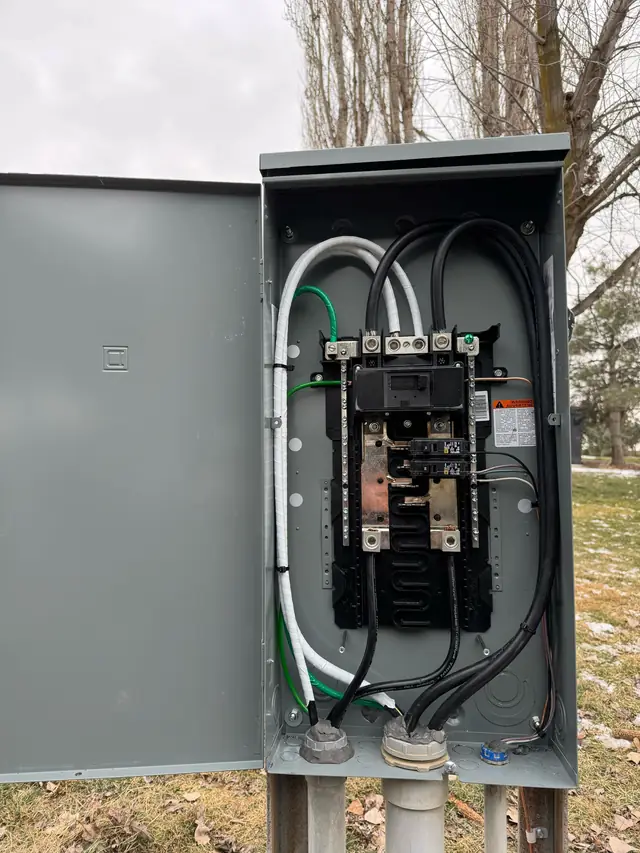
That breaker box in your garage was probably sized for a home from a different decade, and the way you use electricity today has changed more than you think.
Most homeowners go years without giving their electrical panel a single thought.
It's just that gray box in the garage or utility room, the thing you only look at when a breaker trips (usually at the worst possible moment, like mid-blow dry before work). But here's the thing about panels: they get old, they get outdated, and the expectations we put on them have changed dramatically over the last twenty years.
A panel that was perfectly adequate for a family in 2005 might be seriously under-equipped for a home in 2026. And the signs are often subtle, until they aren't.
What modern life actually asks of your panel
Think about how your home has changed.
You might have a heat pump. An EV charger in the garage, or plans to add one. A home office with multiple monitors, computers, and network gear running constantly. Induction cooktops, tankless water heaters, ductless mini-splits in the addition, a heated workshop or shed.
And that's before you count the dozens of small but steady draws, from smart home devices to always-on appliances to gaming setups...
Twenty years ago, the average home used a fraction of the electricity it does today. Panels installed in the 90s or early 2000s were built for a different world. Many homes in the Tri-Cities still have 100-amp panels when the actual demand they're trying to serve calls for 200 amps or more!!
The warning signs that are easy to miss
Your panel will tell you it's struggling, but the signs are usually dismissed as random annoyances:
- Lights flickering or dimming when large appliances (like your AC compressor) kick on
- Breakers tripping more often than they used to
- The panel itself feeling warm to the touch, or making a faint buzzing sound
- Outlets in certain parts of the house feeling warm, or showing discoloration
- A burning smell near the panel or near outlets
- Having to run extension cords or power strips to compensate for too few outlets
Any one of these on its own is worth attention. Multiple of them together is your panel waving a pretty serious red flag.
Why this matters more in eastern Washington
A few reasons this hits differently here.
First, the heating and cooling load in the Tri-Cities is significant. Cold winters and triple-digit summers mean HVAC systems pull a lot of current, and if your panel is already near capacity, that seasonal strain is exactly when failures happen.
Second, more and more homes are converting from gas to electric, whether for heating, water heating, or cooking. Every one of those conversions adds major load to a panel that may not have been sized with them in mind.
Third, the Tri-Cities has a lot of homes built during the construction booms of the 80s and 90s, meaning a significant chunk of housing stock is running on infrastructure that is genuinely overdue for an update.
What an upgrade actually looks like
A panel upgrade is less dramatic than most people expect.
Our electricians swap out the existing panel for a new one sized appropriately for your home's actual demand. Usually 200 amps for modern single-family homes, sometimes higher for larger houses or homes with significant upgrades planned.
The work takes the better part of a day, requires a brief power shutoff, and includes permits and inspection. What you get in return is real confidence: a panel that can safely handle your current life, room for future additions (like that EV charger), and a much lower risk of fire from overloaded circuits or aging hardware.
Our team handles electrical panel upgrades across the Tri-Cities regularly, and we can walk you through whether your existing panel is still up to the job or if an upgrade makes sense.
If you're thinking about adding a heat pump, installing an EV charger, or doing any significant remodel, that's the perfect time to take an honest look at what your panel can actually support.
The cost of waiting
Panels don't usually fail gracefully. They fail in the middle of a heat wave, or during a holiday dinner, or at 11 p.m. on a weeknight.
Ignoring the warning signs means eventually dealing with the failure on its timeline instead of yours.
And in a worst-case scenario, an overloaded panel can be a genuine fire hazard, which is the one outcome worth preventing at almost any cost.
If you've noticed any of the signs above, or your home has gone through major changes without a panel update, it's worth a look.
Call A-One and we'll make sure the electrical backbone of your home is actually up for the life you're living in it!
A-One Air, (509) 586-7613
Call (509) 586-7613More articles
Why Dust is Your #1 Enemy Here in the Tri-Cities
Pasco gets less rain each year than Tucson, Arizona. That is not a typo, and it explains a lot about your bookshelf.
Did You Know, Your Water Heater is Full of ROCKS?
Okay, not rocks exactly. But if your water heater is more than a couple years old, there is a layer of real mineral stone sitting at the bottom of that tank right now.