Plumbing
Water heater repair in the Tri-Cities
No hot water, a rumbling tank, rusty water or a puddle at the base. A-One tests the heater before replacing anything and tells you if it is worth repairing.
Chapter 01
No hot water, rumbling and rusty water each have a different cause
No hot water on a gas heater usually means the pilot or thermocouple has failed, or the gas control valve is not opening. On an electric tank it is more often a tripped high-limit, a failed upper element or a bad thermostat. Water that is warm but never hot can be a failed lower element, or a broken dip tube mixing cold water into the top of the tank.
A rumbling or popping tank is sediment. Hard Tri-Cities water drops minerals to the bottom of the tank, where they harden and trap steam under a crust. Rusty or metallic water comes from a spent anode rod and a corroding tank. A puddle under the tank is different again, because a leaking fitting can be repaired and a leaking tank cannot.
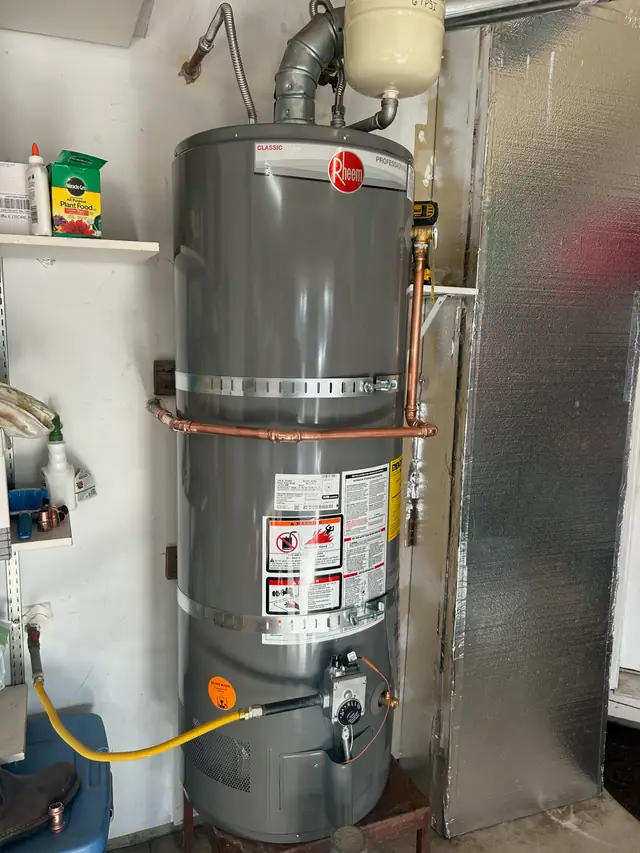
A gas water heater strapped to the wall and piped with new copper in a Tri-Cities garage
Testing before replacing parts
A plumber who swaps parts until the problem stops is guessing with your money. We check power or gas first, then test the thermostat, the elements or the burner, and the safety devices one at a time. On a gas unit we look at the flue draft and the flame, and we check the temperature and pressure relief valve for a weeping discharge.
When a part is bad, we replace that part and confirm the fix by running a full heating cycle. When the tank itself is leaking or badly corroded, we say so instead of selling a repair that will not hold. A tank that has quit at a fitting is a repair. A tank that weeps from the seam is finished, and the next step is replacement.
Chapter 03
Flushing and the anode rod keep a tank alive
Flushing the tank once a year clears the sediment that settles on the bottom, so the burner or lower element is not cooking under a layer of mineral. Hard water in Pasco, Kennewick and Richland makes this a real task instead of a suggestion. Turn off the gas or power, attach a hose to the drain valve, run it until the water is clear, and close the valve.
The anode rod is the part that gets sacrificed so the tank does not. Once the magnesium or aluminum is eaten away, the tank steel starts to corrode. Checking the rod every few years and replacing it when it is mostly gone can stretch the life of the tank. Ask the plumber to look at it during any visit, since the rod sits on top of the heater and is easy to inspect.
Tank and tankless water heater repair from A-One's Pasco shop. 2-Year Warranty on all service parts, with an optional 10 Year warranty on parts and labor.
PlumbingSince 1980
More from the A-One Plumbing crew
When the tank is done, A-One sizes the new heater to your household, sets it with new connectors and straps, and checks every joint before we leave.
On-demand hot water sized to your house. A-One plans the install, services existing units and descales heat exchangers clogged by hard Tri-Cities water.
A burst pipe, a backed-up drain or a water heater dumping onto the floor. A-One offers 24/7 emergency plumbing for homes and businesses across the Tri-Cities.